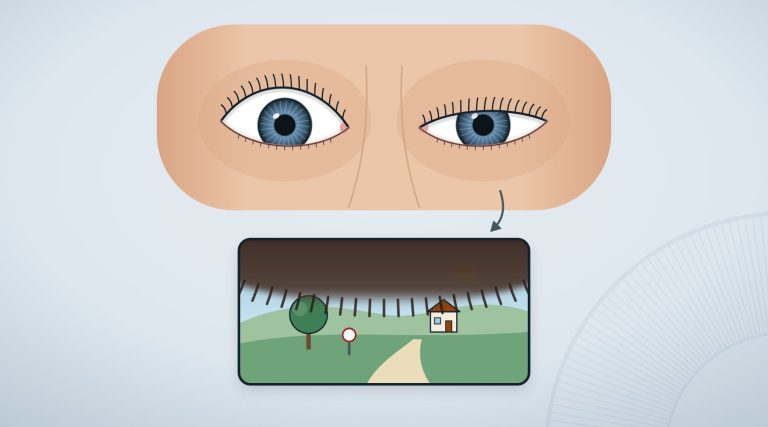
The edge of the eyelid is a strip only a few millimetres wide, but it is very crowded. The lashes grow there, a row of small glands that produce the oily part of the tears opens there, and bacteria live there and, in many people, tiny mites. When this balance breaks down, the edge becomes red, thickens and gets covered in crusts: this is blepharitis.
People who have it are looking above all for blepharitis treatments that work, and often try many. Systematic reviews tell a less simple story than many products promise: some measures give relief, but no treatment has so far had solid evidence of resolving the chronic form1.
In brief
- Blepharitis is an inflammation of the edge of the eyelids: it can involve the base of the lashes (anterior blepharitis) or the meibomian glands (posterior blepharitis)1.
- Poor function of the meibomian glands is very widespread: a meta-analysis puts it at a little over one person in three, with large differences between studies2.
- Demodex mites are much more frequent in people with blepharitis; sleeve-like crusts at the base of the lashes are the typical sign4,5.
- Eyelid hygiene can give relief, and warm compresses reduce symptoms if they hold their temperature1,6.
- For oral antibiotics and tea tree oil the evidence is very uncertain; an anti-parasitic eye drop gave good results in a six-week trial7,8,9.
In this article
What blepharitis is: anterior and posterior
Studies distinguish two main forms, which often coexist1:
- anterior blepharitis, which affects the outer part of the edge, where the lashes grow; it can be linked to bacteria such as staphylococci or be seborrhoeic in type1,7;
- posterior blepharitis, which concerns the meibomian glands, the glands of the inner edge that produce the oil of the tears; specialists also call it meibomian gland dysfunction1.
Typical complaints are redness, a feeling of dryness, discomfort, a foreign-body sensation, itching and abnormalities of the lashes5. It is often a chronic condition, which comes and goes: for this reason reviews speak of chronic blepharitis1.
The meibomian glands and the link with dry eye
Malfunction of the meibomian glands is not a rare problem. A 2021 meta-analysis estimated that malfunction of these glands affects about 36% of the people examined, with very different values between populations: from 21–30% in people of African and Caucasian ancestry up to 68–71% in Hispanic and Arab populations. Men were slightly more affected than women. The authors warn that the studies differed greatly in quality, age and diagnostic criteria2.
Blepharitis and Demodex mites appear among the eye-related risk factors for dry eye10. For this reason the two conditions often go together, and anyone with blepharitis has good reason to read our article on the symptoms of dry eye as well.
Demodex: the mites of the lashes
Demodex are microscopic mites that normally live in the sebaceous glands of the skin; they usually live alongside us without causing problems, but in certain conditions they can become harmful. A 2025 meta-analysis estimates their presence in about 35% of people in the world, with higher values over the age of 60 (59%) and in patients at eye clinics (57%); on the lashes the frequency was 33%. The authors, however, report large differences between studies and signs of publication bias3.
The link with blepharitis is robust. A meta-analysis of case-control studies on 4,741 people, 2,098 with blepharitis and 2,643 without, found a likelihood of infestation about five times higher in those who had blepharitis (odds ratio 4.9)4. Studies of this type show an association; on their own they do not say whether it is the mites that cause the problem.
According to a 2023 review, the mites can damage the edge in several ways: mechanically, by carrying bacteria and by triggering hypersensitivity reactions and inflammation. The typical sign is the sleeve-like crusts that wrap around the base of the lashes. The risk factors for Demodex blepharitis are age, rosacea, a skin disease of the face, and diabetes5.
Blepharitis: remedies put to the test of the studies
The 2012 Cochrane review on chronic blepharitis pooled 34 studies with 2,169 people: 1,661 with anterior or mixed blepharitis and 508 with posterior blepharitis. The studies were so different that only rarely could they be combined. The main results1:
- eyelid hygiene can give relief from symptoms, in both the anterior and the posterior form;
- topical antibiotics gave some relief in the anterior form and reduced the bacteria on the edge;
- for topical corticosteroids and oral antibiotics the results were inconclusive.
The authors’ conclusion is clear: no treatment has solid evidence of resolving chronic blepharitis, and many commercial products are sold without substantial evidence of effectiveness. The authors ask that new treatments be compared with traditional measures, such as warm compresses and washing the edge of the eyelid1.
The study
Warm compresses: temperature matters
A 2023 review selected 22 studies, out of 903 found, on warm towels applied to the eyelids. The towels reduced symptoms, but unless they were reheated they cooled quickly, dropping below the range considered useful, between 40 and 47 °C. Towels heated to about 45 °C and reheated every two minutes were the most effective at raising the temperature of the eyelids, as much as or more than several devices on the market. The studies reported no undesirable effects. The included studies were heterogeneous, and the authors ask for the method to be standardised6.
Oral antibiotics were examined in a 2021 Cochrane review, which found only two randomised trials with 220 people, treated with doxycycline or with a placebo for one or three months. The evidence on the effect on symptoms was judged to be of very low certainty7.
Tea tree oil, widely used against Demodex, was assessed by another Cochrane review, from 2020: six randomised trials with 562 people, all with a risk of bias that was not low. The effect on reducing mites after four to six weeks is uncertain, and three studies found no differences in symptoms compared with other treatments8.
More promising are the results of an anti-parasitic eye drop, lotilaner, in the phase 3 Saturn-2 trial. In 21 US centres, 412 people with Demodex blepharitis received for six weeks either the eye drop or the same liquid without the active ingredient. At the end, the crusts had disappeared in 56 people out of 100 in the first group and in 12–13 out of 100 in the second; the mites had been eliminated in 52% against 15%. The trial lasted six weeks: it does not say how long the results last over time9.
The starting point remains the examination: it is the ophthalmologist who distinguishes the anterior form from the posterior one, looks for Demodex and chooses among the options. Treatments for the dry eye that often accompanies blepharitis are described in our article on remedies for dry eye.
When to talk to an ophthalmologist
- If the edge of the eyelids stays red or full of crusts for weeks despite cleaning.
- If you are losing lashes or see some growing crooked, towards the eye5.
- If you have rosacea or diabetes and your eyes often burn: these are risk factors for Demodex blepharitis5.
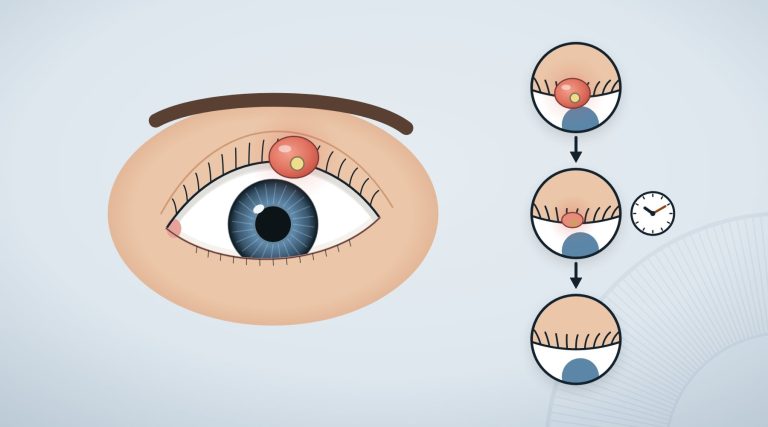
- If a lump appears on the eyelid that does not go away: it may be a stye or a chalazion, which we discuss in our article on chalazion and stye.
- Immediately, the same day: severe eye pain, vision that worsens, intense discomfort in light, swelling of the eyelid with fever. If it is serious, call 112; you will find the other warning signs on our page about eye emergencies.
Frequently asked questions
Does blepharitis go away on its own?
It is often chronic and comes and goes. The Cochrane review found no solid evidence that any treatment resolves it in a lasting way; eyelid hygiene can, however, give relief from symptoms1.
What are the crusts at the base of the lashes?
In Demodex blepharitis, sleeve-like crusts appear that wrap around the base of the lashes: according to a 2023 review they are the typical sign of this form5. It is the ophthalmologist who recognises them and distinguishes them from other causes.
Do warm compresses help against blepharitis?
A review of 22 studies found that warm towels reduce symptoms, but they cool quickly and lose effectiveness if they are not reheated6. Cochrane lists them among the traditional measures against which new treatments should be compared1.
Does tea tree oil work against Demodex?
The evidence is uncertain: in six randomised trials with 562 people it is not clear how much it reduces the mites, and symptoms did not improve more than with other treatments8.
Blepharitis is rarely serious, but it is stubborn. The studies point to simple measures as the starting point, such as hygiene and warmth on the eyelids1,6, and urge caution towards easy promises: for many products the evidence of effectiveness is still thin1.
Sources
- Lindsley K, Matsumura S, Hatef E, Akpek EK. Interventions for chronic blepharitis. Cochrane Database Syst Rev. 2012;2012(5):CD005556. doi:10.1002/14651858.CD005556.pub2 · PubMed 22592706 · PMC
- Hassanzadeh S, Varmaghani M, Zarei-Ghanavati S, Heravian Shandiz J, Azimi Khorasani A. Global Prevalence of Meibomian Gland Dysfunction: A Systematic Review and Meta-Analysis. Ocul Immunol Inflamm. 2021;29(1):66-75. doi:10.1080/09273948.2020.1755441 · PubMed 32589483
- Maleki B, Haghshenas N, Rezaei-Tavirani M, Ahmadzadeh A, Abolghazi A, Robati RM. Global prevalence of Human Demodex Mite: A systematic review and meta-analysis. Acta Trop. 2025;268:107693. doi:10.1016/j.actatropica.2025.107693 · PubMed 40513697
- Zhao YE, Wu LP, Hu L, Xu JR. Association of blepharitis with Demodex: a meta-analysis. Ophthalmic Epidemiol. 2012;19(2):95-102. doi:10.3109/09286586.2011.642052 · PubMed 22364595
- Rhee MK, Yeu E, Barnett M, Rapuano CJ, Dhaliwal DK, Nichols KK, et al. Demodex Blepharitis: A Comprehensive Review of the Disease, Current Management, and Emerging Therapies. Eye Contact Lens. 2023;49(8):311-318. doi:10.1097/ICL.0000000000001003 · PubMed 37272680 · PMC
- Schjerven Magno M, Olafsson J, Beining M, Moschowits E, Lagali N, Wolffsohn JS, et al. Hot towels: The bedrock of Meibomian gland dysfunction treatment – A review. Cont Lens Anterior Eye. 2023;46(2):101775. doi:10.1016/j.clae.2022.101775 · PubMed 36715292
- Onghanseng N, Ng SM, Halim MS, Nguyen QD. Oral antibiotics for chronic blepharitis. Cochrane Database Syst Rev. 2021;6(6):CD013697. doi:10.1002/14651858.CD013697.pub2 · PubMed 34107053 · PMC
- Savla K, Le JT, Pucker AD. Tea tree oil for Demodex blepharitis. Cochrane Database Syst Rev. 2020;6(6):CD013333. doi:10.1002/14651858.CD013333.pub2 · PubMed 32589270 · PMC
- Gaddie IB, Donnenfeld ED, Karpecki P, Vollmer P, Berdy GJ, Peterson JD, et al. Lotilaner Ophthalmic Solution 0.25% for Demodex Blepharitis: Randomized, Vehicle-Controlled, Multicenter, Phase 3 Trial (Saturn-2). Ophthalmology. 2023;130(10):1015-1023. doi:10.1016/j.ophtha.2023.05.030 · PubMed 37285925
- Britten-Jones AC, Wang MTM, Samuels I, Jennings C, Stapleton F, Craig JP. Epidemiology and Risk Factors of Dry Eye Disease: Considerations for Clinical Management. Medicina (Kaunas). 2024;60(9). doi:10.3390/medicina60091458 · PubMed 39336499 · PMC
Study titles are given in their original language of publication. The superscript numbers in the text refer to these sources; citation details come from PubMed (National Library of Medicine).